Dental bone loss & bone grafting in Cannes
The bone that supports your teeth can resorb for several reasons.
Periodontal disease, an old extraction site left unfilled, prolonged wear of a removable denture, or trauma. This bone loss weakens the remaining teeth and can make implant placement impossible — unless the bone is rebuilt beforehand.
Rebuilding to make possible
A bone graft regenerates the volume needed to stabilize your teeth or to receive future implants. We use latest-generation biomaterials, or autogenous bone depending on the case, for reliable results.
Preventive management of extractions
The best graft is the one you avoid. With every extraction, we immediately fill the socket to preserve bone volume. This anticipation considerably eases future treatments and improves the final aesthetic result.
Cases that others deem lost
Many patients are told they "no longer have enough bone" for implants.
In most cases, that's untrue: with today's regeneration techniques, situations judged hopeless elsewhere can be treated.
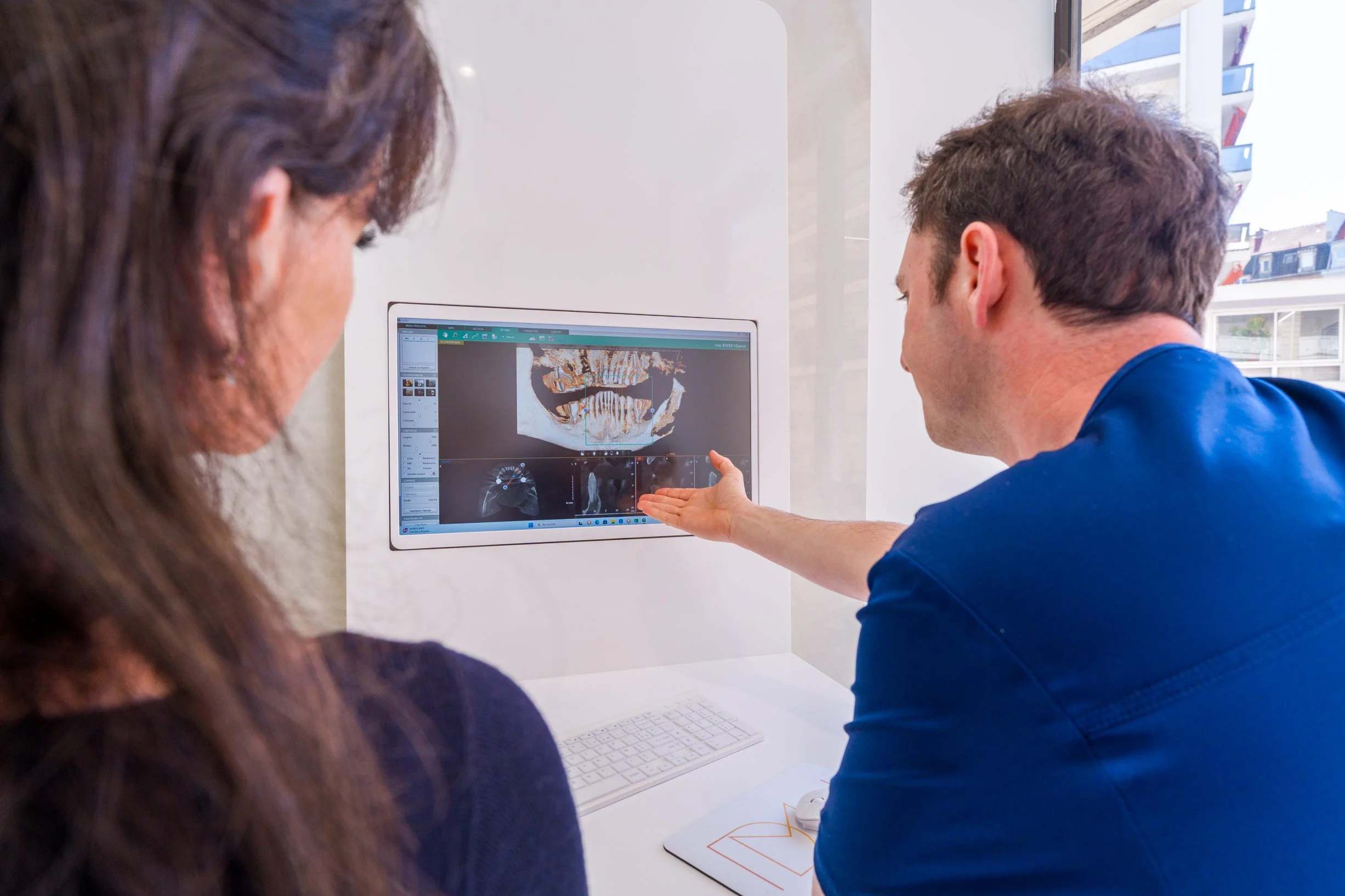
Pre-implant surgery
Bone filling
When a tooth is lost or extracted, the bone that supported it is no longer stimulated and begins to resorb, like a muscle that wastes away for lack of use.
This lost bone volume can complicate, or even prevent, the later placement of an implant.
Bone filling consists of filling the area with a regeneration material that serves as a support for your own bone to rebuild itself naturally. It's a step that prepares the future: carried out at the right moment, ideally at the time of extraction, it preserves the necessary volume and considerably eases all future treatments.
The sinus lift
Above your upper molars lies a natural air-filled cavity: the maxillary sinus.
Over time, especially after the loss of a tooth, the bone separating your mouth from this sinus can thin to the point where it can no longer accommodate an implant.
The sinus lift consists of gently lifting the membrane lining the sinus to create the necessary space, then placing a material in it that will turn into solid bone.
Once this bone has been rebuilt, the placement of a durable implant becomes possible again where it seemed ruled out.
Depending on the case, the implant is placed during the same procedure or after a few months of healing.